



By: Inge Diamond & Danial Arif
In the utility sector, success is often measured by outcomes. But before outcomes come trials, testing, and learning.
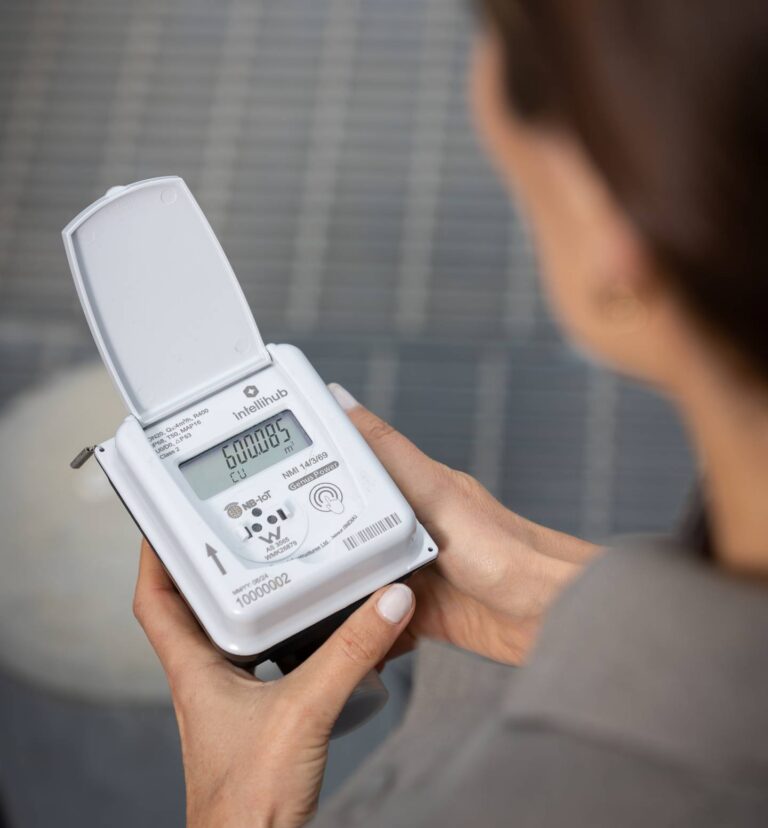
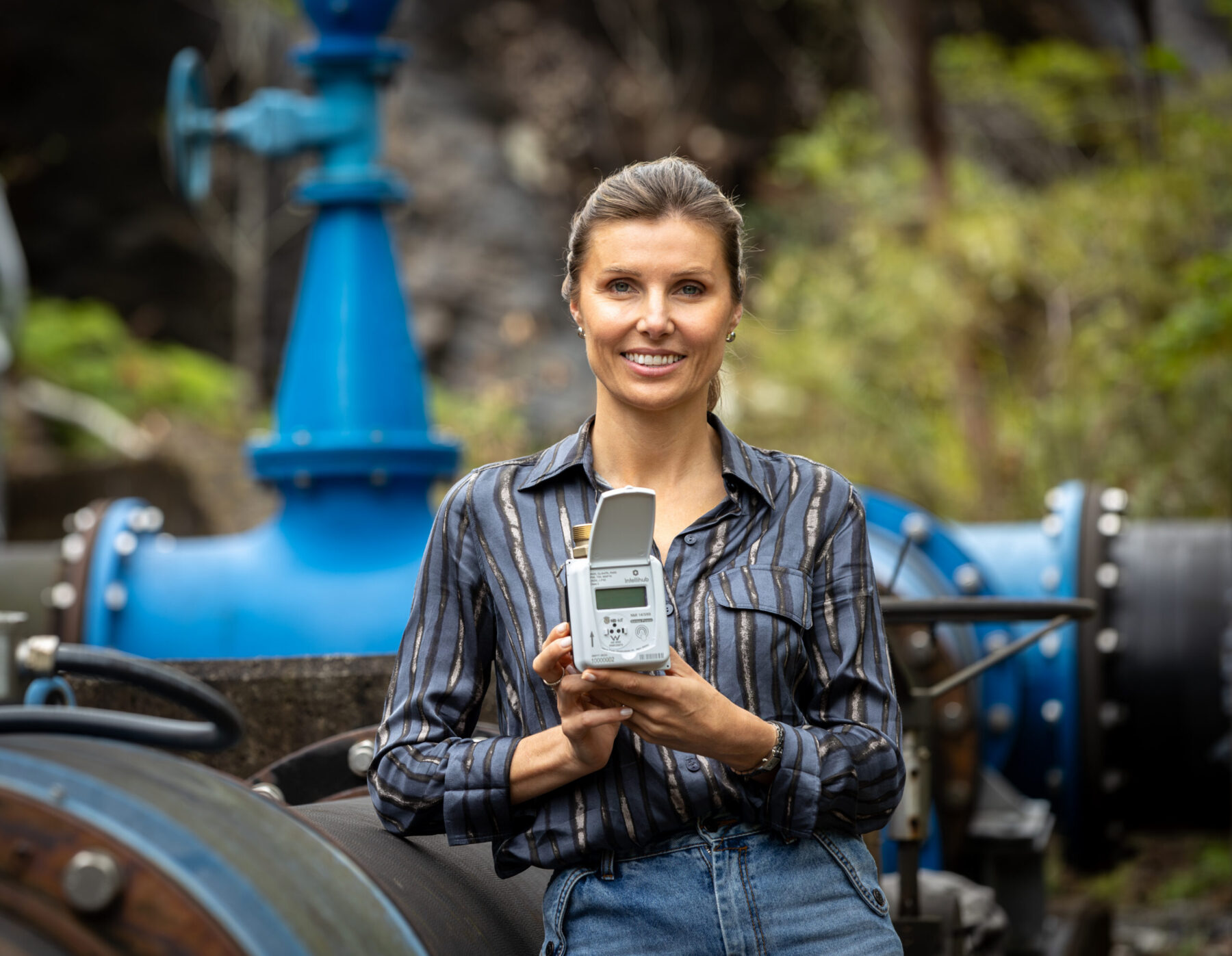
That’s exactly the purpose of Intellihub’s digital water metering pilot currently underway with Ashburton District Council (ADC) in Rakaia, New Zealand.
Deploying smart water technology requires collaboration and innovation that is applied in challenging real-world conditions. That’s why a trial was designed – to identify opportunities for learning and improvement.
Why Rakaia?
When planning the pilot, ADC intentionally selected Rakaia because it was recognised as a difficult-to-serve area with known connectivity limitations due to the telecommunications infrastructure.
Rather than start in the easiest environment, the Council wanted to understand how digital water metering would perform under challenging conditions.
The goal was clear: test highly accurate smart water meters operating over NB-IoT (Narrowband Internet of Things) communications technology and determine how they could be optimised for areas where connectivity is less than ideal.
Why We Chose a Two-Phase Trial
The project was structured as a two-phase deployment.
Phase one involved the installation of half of the planned meters for the trial. Phase one was designed to provide operational data, uncover challenges, evaluate technologies, and create an opportunity to improve the solution before proceeding with
the second phase.
This approach reflects best practice in utility innovation. A successful pilot isn’t one that avoids every issue. It’s one that surfaces issues early enough to solve them before a larger rollout.
Key Learnings from Phase One
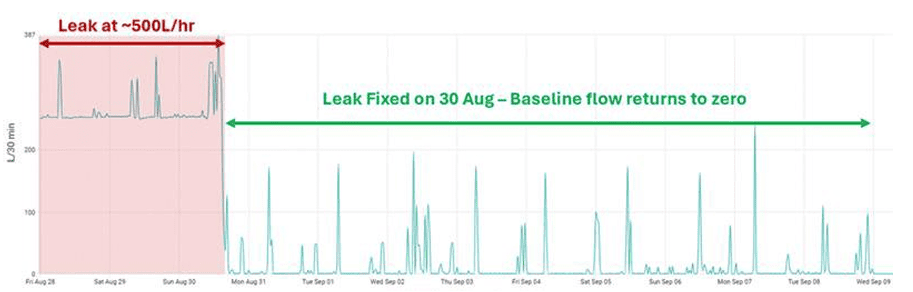
There have been valuable learnings for Council, their customers and Intellihub during Phase one. The Council supply area has one of the highest rates of customer usage in New Zealand. Large customer side leaks up to 500L/hr – the equivalent of two Olympic size swimming pools a year – have been detected and resolved, resulting in significant water savings.
In terms of technology, one of the most valuable aspects of the trial has been Intellihub’s vendor-neutral approach.
Rather than relying on a single technology provider, we supplied ultrasonic digital water meters from two different manufacturers. This enabled an objective comparison of performance across the same local conditions and helped identify the better performing solution for Ashburton’s requirements.
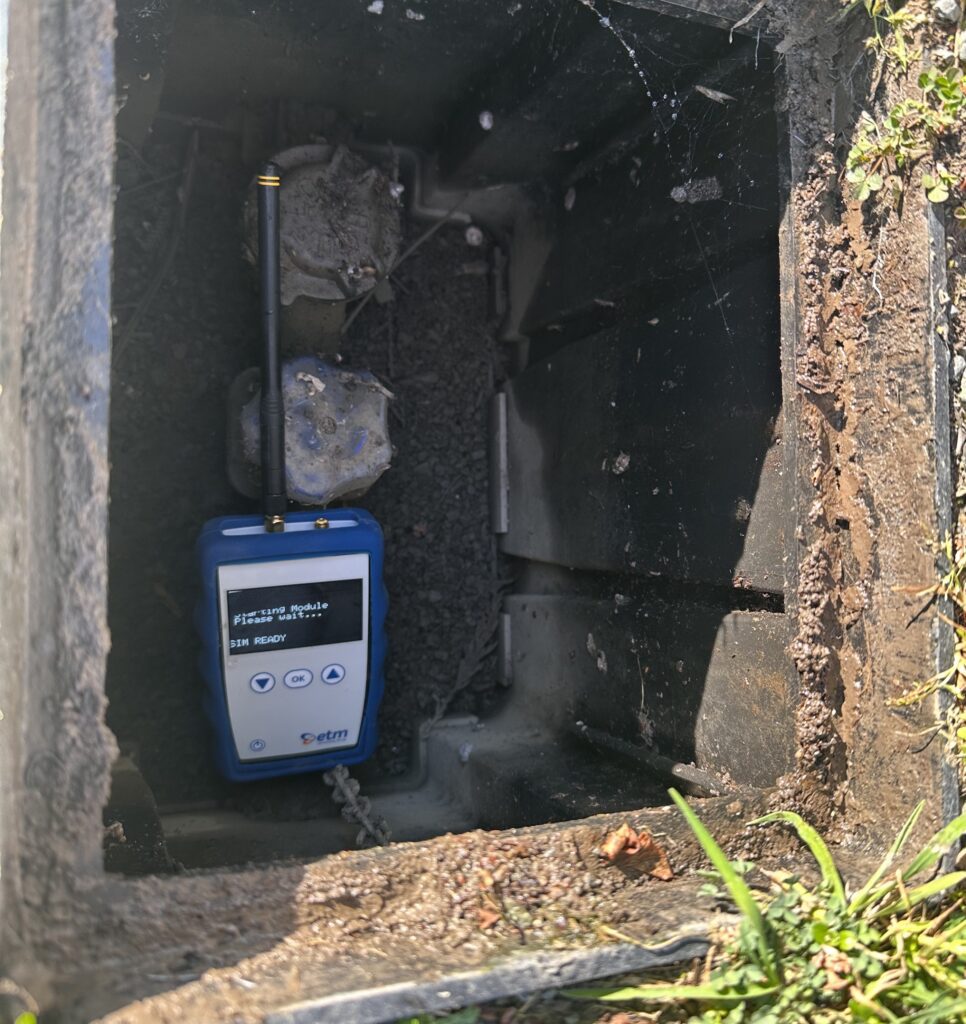
The first phase also reinforced something our initial field testing had already suggested: connectivity within certain meter pits, particularly those with steel lids, would be challenging.
Steel lids can create what engineers refer to as a Faraday cage effect, reducing signal performance and making it harder for communications devices to operate effectively. The good news is that identifying these issues early gave us the opportunity to develop a solution to address the challenges.
Benefits Beyond Connectivity
While much attention has understandably focused on communications performance, the trial has already delivered practical value to Council and residents.
Throughout phase one, Intellihub’s team has proactively monitored consumption and network data, identifying customer-side leaks, abnormal consumption patterns, and other potential issues. These insights have enabled Council staff to engage with
affected customers earlier and support timely leak detection and resolution.
This is one of the key reasons utilities around the world are investing in digital water metering. Beyond automated meter reads, smart water technology provides visibility that helps utilities reduce water loss, improve customer outcomes, and make better
informed operational decisions.
Turning Learnings into Improvements
During phase one, Intellihub worked closely with meter manufacturers, local contractor ACL, and telecommunications provider Spark to develop practical solutions tailored specifically to the Rakaia environment.
This work has included:
- Investigating opportunities to improve local telecommunications coverage.
- Designing and testing specialised antenna-enabled meter variants.
- Optimising solutions for a range of pit configurations and lid materials.
- Assessing performance in local environmental conditions, including temperatures that can fall below freezing.
- Undertaking multiple design iterations to improve communication performance, durability, safety and ease of installation.
This has been a highly collaborative process involving field teams, technology vendors, and Council stakeholders, all focused on achieving the best possible outcome for ADC.
Over the course of the trial, working with Intellihub has been a professional and supportive experience.
We have already achieved some excellent results, particularly in identifying and addressing leaks within the network. The data is provided in 30-minute intervals, giving us an early indication of network performance and potential leakage issues. This enables us to respond more quickly and make better-informed operational decisions.
It has been great to have Intellihub on board for this trial, and we look forward to continuing to explore the benefits of this technology.
Ashburton District Council – Ulrich Glasner, Water Services Manager
Phase Two: Applying What We’ve Learned
The next phase of the pilot will incorporate the lessons from phase one. Poorer-performing meters identified during the trial will be replaced with the new antenna-enabled designs, and the remaining meters will be deployed using the improved approach developed during the testing process.
We expect these enhancements to deliver stronger connectivity performance and improved meter responsiveness across the network.
More importantly, phase two will provide a valuable opportunity to validate the improvements, identify additional leaks and help inform future decisions around digital water metering deployments.
The Bigger Picture
For the water sector, the Ashburton pilot highlights an important reality: digital transformation is a journey, not a single deployment.
Innovation requires testing. Testing creates learning. Learning drives improvement. The true measure of a pilot is not whether challenges emerge, but whether those challenges lead to better outcomes.
As we move into phase two in Rakaia, we’re excited to build on the work completed so far and continue supporting Ashburton District Council in both reducing demand and developing a smart water metering solution that performs reliably in even the most challenging operating environments. Because ultimately, that’s what successful trials are designed to do: turn real-world lessons into real-world solutions.